
By: Sri Narasimha Swamiji
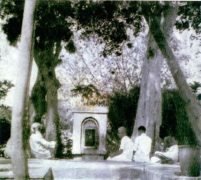
Sometime between 1933 and 1936, I stayed in the Ashram of Sri Upasani Maharaj and in one of the ‘Satsangs’, he went on to list fifteen do-it-yourself steps to achieve humility.
While most of these are unexceptionable – ‘Speak as little possible about yourself’; ‘Accept small irritations with good humor’; ‘Do not protect yourself behind your own dignity’; ‘Choose always the more difficult task’; ‘Accept contempt, being forgotten and disregarded’; ‘Accept censures even if unmerited’. Some of his prescriptions are open to question.
‘Avoid curiosity,’Upasani Maharaj said. Avoid all curiosity, – all curiosity? In a world without curiosity we would not have Science. What makes the apple fall? How does gravity work? Nor would we have literature, which is based on our ability to feel empathy which is the emotional and spiritual counterpart to physical gravity and which binds us together – for Yudhistira seeking Vishnu Sahasranama or Krishna’s ‘Upadesha’ to Arjuna, for an imaginary Hamlet or Don Quixote.
Then there is “Do not interfere in the affairs of others”. Which affairs? While we certainly ought not to be nosy busy- bodies by meddling with other people’s routine affairs, what if the person is in acute distress or danger?
Instead of throwing him a lifeline should we let a drowning man drown, because that is his karma? In the Puskar lake in Ajmer, my right leg was caught by a crocodile and a bullet from a Punjabi standing on the shore killed it and I had a rebirth! Did Lord Sainath himself ‘interfere’ with the affairs of innumerable number of devotees in mitigating their sufferings?
‘Give into the will of others’ also poses problems. Who might those others be whose will we must give in to? Hari Vinayak Sathe is permanently connected with Shirdi because of his constructing Sathe Wada near the Gurusthan. He also provided Megha for Baba’s worship as well as ritualistic ‘upasana’ at Shirdi. Baba made Sathe bring up a ‘Dakshina Bhiksha Sansthan’ and preside over the organization. The intention of this body was to reserve a part of daily dakshina which Baba doled out to individuals. This enraged devotees like Nana Valli who virtually chased out Sathe from Shirdi forgetting all the good work done by him. He was misunderstood! Upasani Maharaj himself was disliked by many at Shirdi!
By giving in to the will of Adolf Hitler and the atrocities committed by Nazism, the German people were made to bear the burden of a collective moral responsibility.
Should we give into the will of a dictator like Nana Valli or Khelkar? Is not dissent – a resolute refusal to give into the unscrutinised and unquestioned will of a few dominant individuals – the bedrock without which any organization cannot exist. Both Sathe and Upasani gave ‘in to’ the will of others.
Another rule ‘Give in, in discussions, even when you are right’. This once again raises the question of the central theme of dissent in any organization. For an organization to exist, it is essential that we not give in discussion when we are right. On the other hand, we should convince the other party who is not right!
I understand that Upasani Maharaj seeks to inhabit a reality of the spirit which rises above and beyond such mundane pre-occupations as to how social systems operate.
Fine. But what about seekers of truths which transcend worldly matters? Should Lord Sainath not have questioned the blinkered orthodoxies of the day in his interactions with several hardcore devotees. Sai Baba told his devotees: “I see myself everywhere. There is no place without me. There is nothing else but me, my eyes are in every place, keeping a watch on my devotees on the evil and the good. No one can escape” (Sai Satcharitra, Chapter14, Ovi 48).
Lord Sainath groomed his nine great devotees – Mahlsapathy, Tatya, Shama, Nana, Ganu, Sathe, Buti, Dixit and Hemadpant – before he elevated them to spiritual excellence. If questioned, would he have abnegated the validity of his wisdom in the name of humility?
Upasani’s concept of humility is based on the spiritual discipline of the emptying out of the sense of self, of the ego. The profound dilemma arises when, in striving to relinquish itself, the ego unintentionally promotes the sense of a self that desires to be a self-above-self. How to relinquish that desire, that self? In other words, how to relinquish the desire for humility, the unmediated pursuit of which can lead to its, very opposite, to a pride in being humble?
Leave a Reply