
By: Seetha Vijayakumar
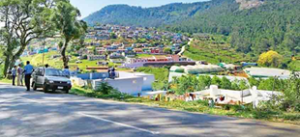 In 1986 when we moved over to Kil-Kotagiri in the Nilgiris, a hill station in Tamil Nadu we were excited at the big Bungalow we were allotted which was at the precipice of the area and we could see the Bhavani river in the foothills flowing into Bhavanisagar dam. My husband enjoyed from his study window contemplating for hours together as he had visions of Sri Narasimha Swamiji along the course of the river. On getting to our Bungalow, I’d planted a fig sapling, by way of replacing a full-grown fig tree that was cut down just before we got into the house by a relative. My mother took the initiative, as fig was her favorite fruit and she was excited at the prospect of eating fresh figs off the tree. Very soon, the sapling became a beautiful young tree, with large green and rust shaded leaves, facing east, glowing in the sunlight.
I learned from Sri R. Seshadri, President of Sri Sai Spiritual Centre, Bengaluru who visited us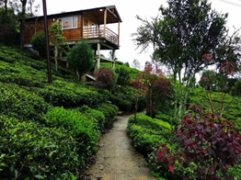 later in the year, that the fig tree’s significance was much more than what I saw as a sentimental tribute by my mother. I was aware that the fig is a symbol of fertility, just as the pomegranate is, especially in eastern countries like China. Fig trees shaped our history, fed our imaginations, and can enrich our future, says Sri Narasimha Swamiji in his work ‘Life of Sai Baba’ –narrating the many dimensions, stories, and insights related to this special fruit tree. Ravana lamented thus in the Ramayana: ‘I have not cut down any fig tree… why then does calamity befall me?’
We had a grand old couple – Sri O.K. Varada Rao who was the first Secretary of All India Sai Samaj and Smt. Sarada who regarded me as their daughter and were addressing my husband as ‘Alludu’ surprised us when they landed at our place one fine morning. I learned from them that the root of the word ‘tantalize’ was to be found in a Greek mythological fig tree tale. Demigod Tantalus was serving his punishment in the Underworld, where he was constantly tempted to reach for a branch laden with sweet figs. Each time he thought the fruit would soon be in his grasp, the tree’s bough would move out of reach, with the force of a sudden wind blowing. This inspired the formation of the verb, ‘to tantalize’.
A forest officer who was our neighbor told us that in the natural world, in forests, the presence or absence of the fig tree would indicate the stable or fragile nature of the forest. Because the fig is an intrinsic part of the cycle of life, and its seeds are pollinated by wasps and other insects, any decline in insect populations would imply that the fig tree was becoming endangered – just as a decline in the number of bees indicates a serious disruption in nature – and thereby adversely impacting the natural cycle.
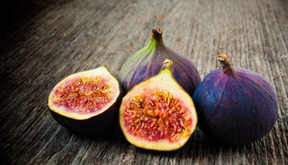
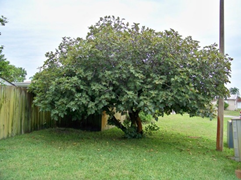 The fig fruit is a direct delivery; there are no intermediary flowers. Hence Sri Narasimha Swamiji in his book ‘Life of Sai Baba’ says ancient Buddhist and Hindu texts describe any futile search as being like ‘looking for flowers in a fig tree’. The Buddha is also said to have talked of sensual pleasures trapping human beings in their strangling embrace much like the strangler species of fig trees that end up holding the host tree in a death-like embrace with their complicated, entwined roots and twisted branches. As a tree species, the fig is believed to have pre-dated humans and perhaps even dinosaurs.
Interestingly, some Jewish Rabbis, according to Shanahan, believe that the forbidden fruit that Adam and Eve ate, disobeying God, was the fig fruit, and not the apple as portrayed in western accounts of the Book of Genesis. We do know that the first couple covered their private parts with fig leaves when they became aware of their nudity. Most Creation stories across cultures feature the fig tree, one way or other — they are abodes of spirits and serve as bridges between earth and sky. And so, it seems that the fig is a vital part of all life.
What kind of lifestyle would facilitate achieving liberation? Should one progressively withdraw from the external world and its inconsequential activities and live in isolation? Or contemplate the Divine while being engaged in worldly affairs? Some advocate the path of rigorous asceticism, while Sai Baba assured that one can gain enlightenment even as a householder. A spiritual aspirant is constantly debating – which out of the two is the better option?
Explaining this subject, Sri Narasimha Swamiji quotes, an anecdote from Mahabharata. A sage named Jajali stood motionless for many months while practicing extreme asceticism and some birds built their nest and laid eggs in his hair. Overcome by the thought that if he moved, the birds might suffer and die, Jajali remained in that position without food and water till the time the birds grew up and flew away. Jajali rejoiced that by doing so he had reached the pinnacle of asceticism, compassion, and spiritual growth.
Just then a heavenly voice told him that a merchant named Tuladhara was more advanced in spirituality than him and he must visit Tuladhara. When Jajali met Tuladhara he observed that as Tuladhara went about his business of selling goods, different kinds of people came to the shop. Some customers were good, others were bad; some expressed gratitude while others ridiculed the merchant. But Tuladhara remained in perpetual equanimity, he was neither exalted by the love nor distressed by the hatred and went about doing his work honestly. While balancing the scales in his business, Tuladhara had achieved an inner balance that transcends duality.
Sri Narasimha Swamiji concludes that Enlightenment is a transcendent state where one realizes that the Self is different from body, mind, and its sensory objects. Also, pairs of opposites such as pain and pleasure, love and hate, birth and death, attachment and detachment, loss and gain, activity, and passivity are nothing but a playful manifestation of consciousness.
Consequently, the person remains balanced, always and under all circumstances. The individual is full of bliss having experienced the vision of absolute consciousness in Sai Baba. All the emotional, physical, and psychological problems that troubled him dissolve completely.
What is important is that the individual contemplates absolute consciousness constantly and uproots whatever it is that creates a false illusion in his mind and drives him away from the truth. Whether he is meditating in a remote cave or envisioning the Divine while doing his job in a metropolitan city is just an ancillary event.
One powerful yogic technique that can help a person achieve this difficult task is ‘Pratyahara’, elaborated in the Shandilya Upanishad. Pratyahara is the withdrawal of the senses from their objects. We have experienced this practically in our conversations with Sri Radhakrishna Swamiji at Bengaluru. Whenever someone started discussing politics Swamiji started reciting Vishnu Sahasranama. Here he demonstrated that ‘Pratyahara’ is the withdrawal of the senses and not the external objects per se. Therefore, one can withdraw one’s attachment and attention to external objects anywhere, whether it is a secluded forest or a busy shopping mall.
This is accomplished when one repeatedly tries to see the one absolute consciousness ‘Sai Baba’ hidden in all forms and aspects of creation. With repeated practice, awareness comes up, that all the senses and their umpteen objects, mind, and body are a manifestation of absolute consciousness. The mind then gives up craving, it reflects this one consciousness and stays in perfect balance.
Sai Baba states: “I see myself everywhere. There is no place without me. I fill all space in all the directions. There is nothing else but me.” (Sai Satcharita – Chapter 14, Ovi 48)
Leave a Reply