
By: Sri Ranga Priya Mahadesikan Swamiji
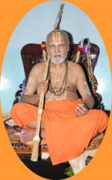 Guru Poornima is a happy and blissful occasion. The most suitable prayer to the great Guru Lord Sainath to bless us on this Guru Poornima is to introspect on the first known poetic verse in Indian literature. I refer to the work of the first poet, Sage Valmiki, of Srimad Ramayanam fame. Vedas and Vedangas that came before the Ramayana, though usually set in various chhand, meters, are considered gadyam – ‘prose’ in Sanskrit – while the Ramayana is padyam, poetry. Sai Satcharita itself is a lovely poetry.
That first shloka, verse, of Ramayana happened in the most extraordinary way. It is unique for Sai devotees as it denotes compassion for which Sai Maharaj stands and for us Lord Sainath is Maha Vishnu.
Lord Brahma’s son, Sage Narada, paid a sudden call on Valmiki, during which he disclosed the existence of a noble person called Rama, who embodied all the 16 good qualities demanded by Valmiki. After that illuminating visit, Valmiki went for a swim in the river Tamasa, accompanied by Sage Bharadvaja. The water was so pure and clear that they could see all the way down to the riverbed. Marveling at its perfect clarity, they began to make their way back to Valmiki’s ashram.
 On the way, Valmiki’s eye caught a pair of krauncha birds – demoiselle cranes, called koonj in Hindi – with long white necks and striking plumage. They were dancing a graceful love duet, beautiful to behold. The sages were enchanted. Suddenly an arrow whizzed in, wounding the male bird, which fell down in agonized death throes. The female bird fluttered around him, sounding pitiful cries. The startled sages discovered that a hunter had crept into the scene and was triumphantly advancing on the dead crane.
Imagine Valmiki’s state of mind just then. The day had begun on a great, big high with Narada’s visit. Inspired and excited that there was actually someone like Rama, the hero he had imagined, and hoped to find someday, Valmiki was already in an exalted state. The purity of the river Tamasa and his refreshing plunge into her waters was like a metaphor for the purity that the human soul could achieve when cleaned of negativity. In this state of mind-body-spirit happiness, Valmiki saw and felt the beauty of creation and the Creator in the love dance of the cranes. The abrupt end of this woodland idyll was a rude shock to the sage. His heart burst its bounds with a great rush of karunya, and compassion.
“Why did you kill that bird?” he asked the hunter angrily. “I am a hunter. It is my legitimate occupation to hunt,” said the hunter squarely. The agitated sage, once a hunter himself, said,
“Ma nishada pratishtham tvamagamahsavati sama
Yat kraunchamithunaadekam avadhi kamamohitam.”
It means, “O hunter! May you never be respected for killing that unsuspecting crane when it was happily dancing with its mate.” In Sanskrit, this came out as a rhythmic sequence of 32 syllables, which, re-examined, proved to have a deeper metaphysical meaning, praising Lord Vishnu. Many Sanskrit scholars miss this inner meaning in Valmiki’s curse to the hunter.
Shaken by his own words, Valmiki paid his obeisance to Lord Vishnu and hurried home. And whom did he find waiting at his ashram but Brahma himself, in his swan chariot. Brahma had missed the presence of Goddess Sarasvati. Looking for her in all directions, Brahma discovered that she had flown by Valmiki’s ashram to bless him with eloquence to compose a new epic Ramayana. He stayed on to bless Valmiki in his new role as a poet. That first shloka started him off and we shall adopt this as our invocation to Guru Poornima celebrations.
This was the birth of poetry as conjured by our ancients as Ramayana, and its trigger was compassion with total surrender to Lord Vishnu and Lord Sainath. Isn’t that something profound, to steer our moral compass by, if we claim to love Sai Maharaj as our Supreme Guru and adopt compassion in all aspects of our life?
Leave a Reply