
Patanjali yoga offers a path of self-cultivation; the word cultivation stands as much for spiritual care as for agriculture, writes Hari Sitaram Dixit in his memoirs
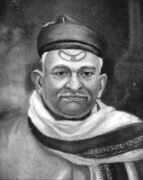
In 1909, H.S.Dixit met an ascetic in a hill cave in the outskirts of Nagpur. The ascetic possessed nothing but a thick, cotton blanket, a napkin, a dhoti, and a wooden water-pot. For 21 years of his life, he had lived there at the cave, where he spoke to his visitors only through a window. But he mainly became famous for writing one of the most important comments on Patanjali’s Yoga Sutras.
He told Dixit that he will soon meet a Mahatma and through him, he will gain Self-realization. What Dixit needs is self-cultivation. This spiritual practice is concerned with bringing about a fundamental change in oneself.
In his Yoga Sutras, 1:33, Patanjali writes about self-cultivation, which translators use for the Sanskrit term Bhavana, deriving from the Sanskrit root bhu for ‘becoming’. More precisely, Patanjali writes about the cultivation of kindness, compassion, joy, and equanimity.

Patanjali describes in so far, a path of self-cultivation, as his practice of yoga is aimed at kaivalya, isolation, or complete salvation. Once this state occurs, the practitioner is no longer the same, for he realizes what his true Purusha, Self, is and, therefore, sees the world with different eyes. Through the help of Miirikars, Dixit meets Sai Baba. He becomes an ardent devotee with a total surrender to the Guru.
In 1918, Baba permitted Dixit to build a Wada at Shirdi, and Dixit is permitted to wear saffron robes and settle down at Shirdi.
The correct type of cultivation does not know anything about compulsion either external or internal. There is no ‘you become better, more flexible, stronger’. Instead of coercive flawlessness, it stands for acceptance and sees the alleged imperfections as part of the whole. Cultivation brings us into resonance with the world and, thus, with ourselves and the ego dissolves completely.
Sai Baba advised Dixit to follow Patanjali on his path of self-cultivation. We do not necessarily have to follow the strict ascetic path. Cultivation can also be done in everyday life and so many other areas.
Leave a Reply