
By: Dr. G R Vijayakumar
Worldly, materialistic people are weighed down by worry and anxiety. Take a look at the people going to work every day. Does anyone appear jovial or inspired? Most look glum. Sri Narasimha Swamiji in his masterpiece ‘Life of Sai Baba’ said, “Your only duty in life is to be happy.” If you anchor to Sai Baba, happiness is infectious; it changes everyone it touches. The waiter bursting with a smile brings cheer to the people he waits on, the street sweeper who wishes morning walkers brightens their day, the child full of fun and laughter attracts everyone around. Joy is a driving force. The joy of our worship to Sai Maharaj exerts a powerful pull, drawing us towards our highest purpose.
The Bhagwad Gita begins with Arjuna’s grief. We are all like Arjuna. We have so much yet lacked the ability to enjoy what we have because we see only the one thing we do not have. Billionaires are depressed, talented people are stressed out; teenagers have issues. That is the reason Sai Baba tells us God is a friend of the poor and miserable and be happy with what we have.
Krishna is the epitome of joy and happiness. His life inspires people even now. He was born in a prison, was separated from his natural mother at birth, and was brought up by adoptive parents. As a child, Krishna was hounded by his wicked uncle who wanted to kill him.
Yet he was always full of fun, laughter, cheer, and mischief. His magnetic personality drew everyone to him. The Gopis, infuriated by his pranks, forgot their anger when they saw his enchanting smile!
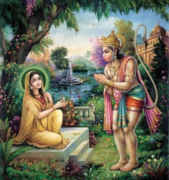 In the Gita, Krishna says grief comes from wrong identification and attachment. This, in turn, comes from ignorance. Sai Baba points to Nana Saheb Chandorkar that just a little knowledge removes sorrow and paves the way to infinite bliss, the very purpose of our existence.
When Swami Vijayananda seeks Baba’s permission to go to his native place he tells him about Sita Ma that he is chasing after a mirage. You see objects out there and believe that happiness lies in the world.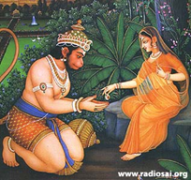 In the Ramayana, Sita represents the individual. Sita was perfectly happy, whether she was enjoying luxuries in the palace at Ayodhya, or going through forest life, as long as her attention was on Rama, the Spirit within. If you look inward, you are happy, irrespective of what the world offers.
Sita’s problems began when she looked out. She saw the golden, fleeting deer and wanted it. That one outward pursuit brought her misery. The deer represents sense objects, attractive and tantalizing, but passing. Sense contact gives instant pleasure but leads to sorrow in the end. You get enslaved by the senses, portrayed by the abduction of Sita by Ravana, the ten-headed monster; each head represents each of the ten organs of perception and action.
Sita soon learns her lesson. She refuses the pleasures of Ravana’s palace and chooses to remain in the Ashoka Vana, the abode of no pain. When you turn inward you are in the zone of no grief.
Hanuman then appears with Rama’s ring. This assures Sita that Rama is on his way to rescue her. When you pursue the higher, you are often alone. But before long you get the ‘ring’ of confidence. Something happens to assure you that you are on the right path and that your redemption is near.
Finally, Rama wins the battle against Ravana and Sita unites with Rama. You overcome your lower tendencies and gain union with the Self, Atman. You enjoy unbroken, infinite bliss that is not dependent on the world
As per Baba’s advice, Swami Vijayananda stayed at Shirdi and soon passed away. Baba had foreseen his death and did not allow him to travel.
Leave a Reply