
Source – Sai Samartha Charitra by Smt. Zarine Taraporevala
In 1858 the moment Sai Baba settled down in a dilapidated mosque, he started a holy fire by striking his ‘satka’ in a corner of the mosque. He named it ‘Dhuni’. He turned towards it, and he worshipped it daily as ‘Yajna’.
Later Sri Sivanesan Swamiji, popularly called ‘Chavadi Swamiji’ from 1953 onwards till his Mahasamadhi in 1997 started daily worship of Dhuni and guided Sai devotees to perform Dhuni Pooja.
According to Sai Maharaj and the Bhagwad Gita, our entire life is a yajna, an offering, self-sacrifice. You pour out everything into Dhuni, so as to worship the Almighty – Sainath Parameshwara – Sainath Parambrahma. He in turn helps you in getting rid of the bondage of your Karmas, rebirth, and many lives of suffering. Dhuni Pooja is very sacred to Sai devotees as it was an ordained Yajna by Sai Maharaj as an enactment of sanskaras.
The bigger picture is that Sai Baba wants us to see Dhuni Pooja in our life as a huge yajna,  offering, to the Supreme, which could be of several types. Lord Sainath draws the attention of Nana Saheb Chandorkar in quoting Gitacharya talk about these in the fourth chapter of the Gita. He mentions tapo-yajna; jnana-yajna; svadhyaya-yajna; and pranapana-yajna – pranayam. Virtually our entire life is a yajna and that alone brings one a higher quality of life and knowledge when we perform Dhuni Pooja.
Dhuni Pooja means to pour out, offer as ahuti all that you gain in life, and surrender to Sainath Maharaj. In the Gita, chapter 4, Krishna mentions that even breathing, the very manifestation of life,
 is a yajna. Breathing in is prana and breathing out is Apana. Krishna says that a yogi should offer prana into Apana and, conversely, Apana into prana. One should practice it with a suitable holding of breath regularly which creates a cycle, the pranapana cycle. This is called yajna, an offering without any dravya, material, except your breath. In the Yoga Sutras, Patanjali has propounded pranayama as one of the eight parts of the yogic practice. It takes the sadhaka to the ultimate objective of samadhi.
Earlier in the Gita, the same is variously mentioned as siddhi, nirvana, and Brahma-nirvana or paramagati. To practice it for the entire life as an offering for Sai devotees doing Dhuni Pooja with ‘Shradda’ and ‘Saburi’ qualifies ‘Anugraha’ of Lord Sainath and we will be in total bliss and hence it is ‘ pranapana-yajna’
The other types of yajna such as tapo-yajna, dravya-yajna, and svadhyaya-yajna are mentioned in the Gita and we include them in our Dhuni Pooja.
In dravya-yajnas, offerings are made through hawan ahutis to the deities in Dhuni Pooja as prescribed in the shastras. The practice of yoga is mentioned as daiva-yajna, also known as yoga-yajna. The yogi may or may not sacrifice any material. Even reading of ‘Sthavan Manjari’ ‘Sundara Khanda’ extracts from ‘Life of Sai Baba’ by Sri Narasimha Swamiji, recitation of Vishnu Sahasranama, enchanting Sai Bhajans, sharing of Devotees experiences, followed by Dhuni Pooja are described as svadhyaya-jnana-yajna. Svadhyaya-jnana-yajna is the purest of all.
Sivanesan Swamiji described that there is nothing as sacred as Dhuni Pooja. Of the three Gunas, qualities, namely, Satva, Rajas, and Tamas, it is the Satva-guna that yields Jnana, wisdom. Sai Baba further says that whichever Yajna is chosen, it is invariably received by him.
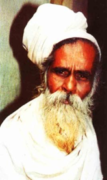 The Jnana-Yajna is essentially worshipping Sai Maharaj, which removes all illusion and, thereby, we all achieve the unpolluted vision of reality. we are saved from Moha, ignorance, or attachment of all kinds. As we offer Dhuni Pooja Lord Sainath is the Yajna Purush.
People who have no desire for rewards from a successful Dhuni Pooja and perform offering as an incumbent moral duty are said to be Saatvik-Yajna performers.
The above examples show that Dhuni Pooja Yajna is living nobly, in the spirit of ‘Work is Worship’. It is about conducting oneself in such a way that it becomes an example for persons with enterprise, without desire for any reward, exerting themselves only for the sake of duty; and for persons heading for spiritual upliftment through knowledge or wisdom.
Thus, Lord Sainath and Krishna in the Gita have prescribed that we must steer clear of desires and offer ourselves for attaining maximum good for self and humanity. Sri Radhakrishna Swamiji has stated – ‘A desireless person is a veritable Emperor.’
Leave a Reply