
By: Seetha ‘Priya’
Relationship between a Guru and a Disciple :
Once a contact between the Guru and the bhakta(disciple) is established, the relationship between master and disciple becomes a thing of beauty. This leads us to consider the principle of reciprocity which operates in this relationship. In return for the innumerable demands which a bhakta makes on the Master, it is but natural that the Guru too should impose a few conditions on the bhakta. The Guru expects total surrender, absolute obedience and, the last and most important, supreme effort.
Guru’s mission :
The Guru’s mission appears to be two-fold. The first and most important concern of the Guru is to awaken, elevate and transform the seeker. The second and final purpose of the Guru is paradoxically to help the disciple seeker to transcend this state of complete dependence on the Master, which dependence the Guru himself had taken such pains to foster. The final spurt of realizing his true identity with God is exclusively the Seeker’s job.
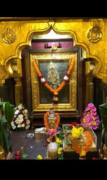 Saint of Shirdi – Shri Sai Baba – Saguna Brahma – Guru :
The Saint of Shirdi recognized and emphasized the beauty of a Guru-guided life. Shri Sai Baba of Shirdi is the Guru incarnate to live on this earth in the late part of 19 th century and early part of 20 th century. Shri Sai Baba gave tremendous importance to the adoption of the Guru in one’s spiritual “Sadhana”(pursuit). With an innate compassion Shri Sai Baba often declared -“I am your savior, not only from the weight of sin, but from the weight of care and misery”. “Guru is all the Gods”, said the Saint of Shirdi. Moreover, Baba declared reassuringly though as the all-pervading Guru he would naturally expect complete surrender, obedience and loyalty, he promised that through his supreme powers he would extend complete protection to those who put their implicit faith in him.
Is Surrender to the Guru the only Sadhana Prayer?
This question was hotly debated even in the presence of Baba. The answer to this complex question as given by Shri Sai Baba comes straight out of Sri Sai Satcharitra.
Kakasaheb Dixit (an ardent Devotee of Shri Sai Baba) has published his notes regarding this matter. Next day after Hemadpant’s meeting with Sai Baba, Kakasaheb went to Baba and asked whether he should leave Shirdi. Baba Said, “Yes”. Then someone asked – “Baba, where to go?” Baba said, “High up.” Then the man said, “How is the way?” Baba said, “There are many ways leading there; there is one way also from here (Shirdi). The way is difficult. There are tigers and wolves in the jungles on the way.” I (Kakasaheb) asked – “But Baba, what if we take a guide with us?” Baba answered, – “Then there is no difficulty. The guide will take you straight to your destination, avoiding wolves, tigers and ditches etc. on the way. If there be no guide, there is the danger of your being lost in the jungles or falling into ditches.”
Dabholkar was present on this occasion and he thought that this was the answer Baba gave to the question whether Guru was a necessity and he thereupon took the hint that no discussion is possible as is illustrated in the instances of great Avatars like Rama and Krishna, who had to submit themselves to their Gurus, Vasishtha and Sandipani respectively, for getting self-realization and that the only virtues necessary for such progress are faith and patience. (Vide Sai Satcharita, Ch. II, 191-92).
Has Shri Sai Baba qualified to be a Guru?
Not only did the Saint of Shirdi perform his duties of Guruship during his life but was able to establish a lasting Guru-parampara (successors of Gurus) through his vision and foresight.
Shri Sai Baba was not content to transfer his messiahship to his descendants. In the last years of his life, he said to his devotees with a mother’s solicitude, “Do not grieve when my body passes away. My tomb will live and move and speak with all those who make me their sole refuge.” Happily, though we have celebrated 100 years of his mahasamadhi, Sai Baba’s promise is abundantly fulfilled even today. Millions of devotees flock to his Samadhi regularly to seek his blessings. Through decades of void there comes echoing down the years the gracious message- “Lo, I am beside you always”.
Significance of Guru Poornima Day.
The Poornima (Full Moon) Day in the month of Ashadha (July-August) is known as Guru Poornima. This is a very sacred day on which special worship is performed to the Acharyas (Gurus), who, through their Infinite Compassion and Supreme Grace, have imparted the Knowledge of the Absolute (Brahma Vidya) through a long and continuous line of Acharyas (Guru Parampara) to all the Seekers of the Self.
Celebration of Guru Poornima Day in Shirdi
The celebration of Guru Poornima began in Shirdi around 1908. One day Shri Baba told his disciple Shri Dada Kelkar, “Do you know this day is the day to approach Gurus? Bring your worship articles”. Then Shri Kelkar and his friends looked up the calendar and found that the day was Guru Poornima day. They started worshipping Shri Sai Baba as their Guru, and that practice has continued till today not only in Shirdi but all over the world where prayers are offered to Shri Sai.
How does one celebrate Guru Poornima?
Guru Poornima is celebrated by devotees by performing Guru Pooja (offering prayers to the Guru) to our Lord Shri Sai Baba. Each Sai Devotee can either perform the Sai Guru Pooja (prayer) at home or attend a Sai Guru Pooja
Leave a Reply