
By: Dr. A. Ramaswamy Iyengar
A freedom fighter and a lawyer from Amaravaty, Ganesh Shrikrishna Khaparde, came to Shirdi seeking protection from Lord Sainath for himself from an impending arrest by British Police. His wife and son accompanied him. Upon reaching Shirdi, his son was attacked by plague. Baba saved them from these impediments by asking Das Ganu Maharaj to make them understand Isha Vasya Upanishad. It was on the battlefield that Krishna started teaching Arjuna. He didn’t teach him when everything was all right because Arjuna was not ready to listen; he thought Krishna was just his friend.
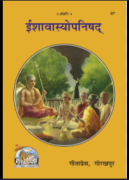 But when turbulent times came, knowledge and wisdom through Isha Vasya Upanishad became essential, for calmness, steadiness, and clarity of mind were necessary to perceive things they were intended to be and to act wisely. Khaparde had this and stayed at Shirdi for nine months without any hassles, and Isha Vasya Upanishad proved handy to him.
First, we must recognize and accept that it is a turbulent time. When we deny the turbulence, we live in a utopia and will be unable to find a solution. The first step is to recognize, and the second is to accept. Accepting a situation helps calm the mind.
Per Gita, Arjun did not accept the situation at first. He sat on the floor and trembled – the superhero, who had never cried in his life, wept in front of Krishna, saying, “I cannot fight.” Similarly, Khaparde was diffident and told Sainath that he would return to Amaravati.
Krishna in the Gita said, “Come on! Drop this weakness from your heart. Let go of this emotional baggage you are carrying. Get up.” Krishna boosted Arjuna’s ego, saying, “You can handle this situation. Come on, get up. What will people say about you?” Lord Sainath made Khaparde learn the intricacy of Isha Vasya Upanishad and tide over the situation.
On the battlefield, when Arjuna began to feel despondent about the possible outcomes of his actions, Krishna taught him the teachings from Karma Yoga, Bhakti Yoga, and Jnana Yoga, and thus the Gita was born. Krishna told Arjuna, “You have the right to perform your duty, but you are not entitled to the fruits of your actions.” Lord Sainath reiterated that Isha Vasya Upanishad also makes you a Karma yogi.
Most people do not act without expecting results. When you cook rice, you put the rice in water and then place it on fire because you know that this action will give a result. Results depend on actions. You think, “I cooked the rice, I put it on the fire.” No, rice followed the law. If you, or anyone anywhere, pour rice into water and place it on fire, it will be cooked. But you think that you did it. Isha Vasya Upanishad teaches that you cannot do anything contrary to the law. Acting is within your control, but even then, you can only influence it indirectly, not directly.
The only way to control your actions through Isha Vasya Upanishad is to transcend the three gunas – sattva, purity; rajas, passion; and tamas, inertia. Tamas represents inertia, rajas, restlessness, and sattva, balance. When you abandon laziness and remain balanced without becoming restless for the benefits of your actions, you can also influence your actions.
Isha Vasya Upanishad prescribes that If you are participating in a race, you should have no interest in looking at who is running faster than you. Your focus should be on your track and your run. When you give 100% in any task, even if you lose, you feel satisfied that you used your full potential and performed your best.
So, move forward in life with a focus on Isha Vasya Upanishad, which teaches us to maintain equanimity regardless of circumstances. Until you are emotionally calm, how can happiness be possible?
Leave a Reply